General Instructions
• Reading time – 10 minutes
• Working time – 2 hours and 20 minutes
Total marks: 80
• Attempt Questions 1-32
• Allow 2 hours and 20 minutes to attempt the questions
Question 1 (1 mark)
What is the main difference between qualitative and quantitative data?
Question 2 (1 mark)
Consider the following SQL query:
SELECT First_name, Last_name
FROM Users
WHERE Score > 80
ORDER BY Score ASC
What does the SQL query do?
Question 3 (1 mark)
Within business analytics software, which of the following is a limitation?
Question 4 (1 mark)
What is the main advantage of using a pivot table in a spreadsheet program?
Question 5 (1 mark)
In which type of decision support system is a fixed set of rules followed without human involvement?
Question 6 (1 mark)
What is a typical use of sensors and actuators in an intelligent manufacturing system?
Question 7 (1 mark)
Why may a development team decide to create a prototype when developing an enterprise system?
Question 8 (1 mark)
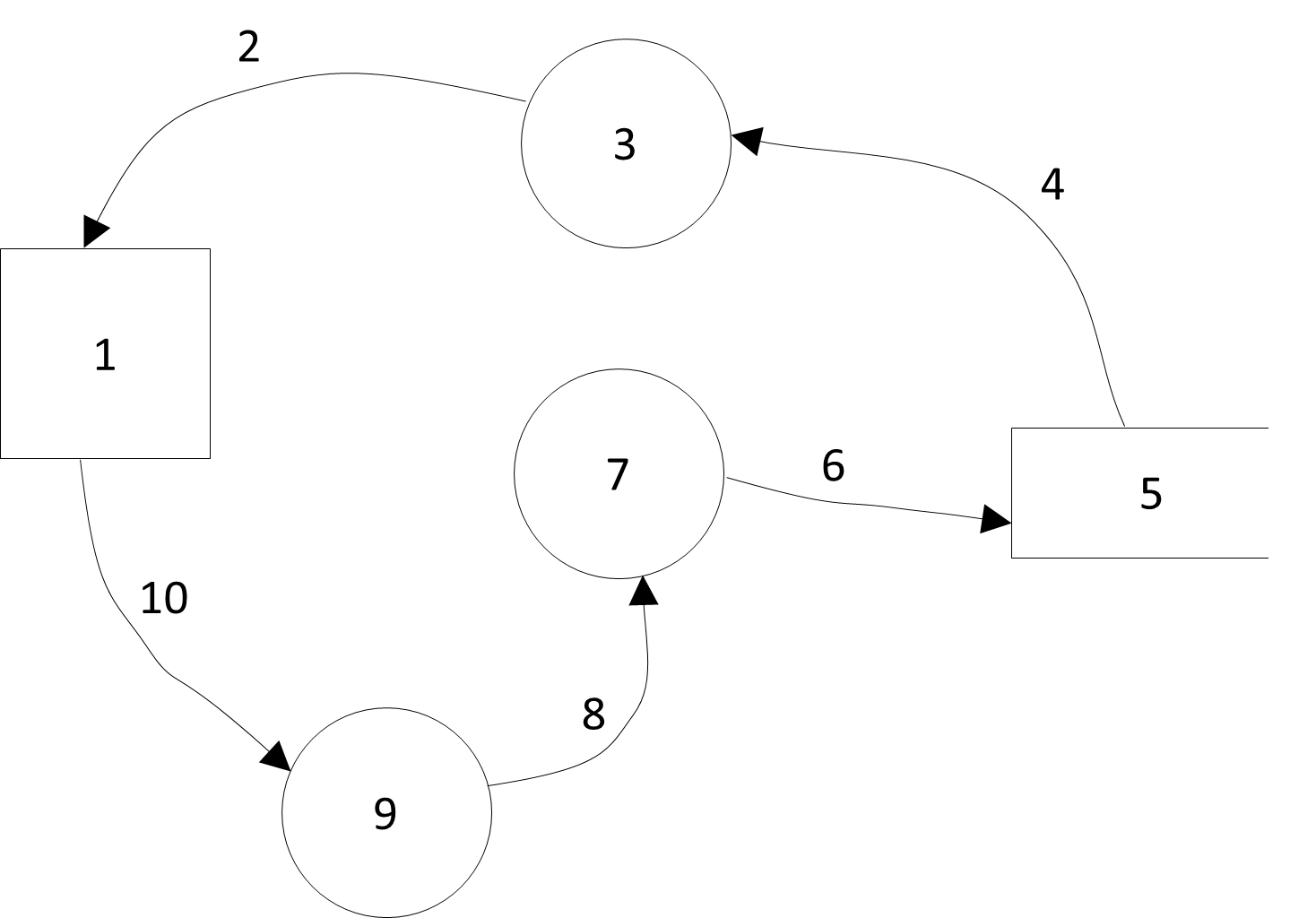
| Answer | Unprocessed data | A report | System database | Users | Processing data | Report creation |
| A | 2 | 10 | 7 | 5 | 9 | 3 |
| B | 10 | 2 | 5 | 1 | 9 | 3 |
| C | 1 | 6 | 1 | 7 | 3 | 4 |
| D | 10 | 2 | 5 | 1 | 7 | 2 |
The labels in the data flow diagram could be used to represent which of the following elements?
Question 9 (1 mark)
Which of the following devices are part of the Internet of Me (IoMe) and the Internet of Things (IoT)?
(More than one may be selected.)
Question 10 (1 mark)
Which of the following methods helps maintain data security?
(More than one may be selected.)
Question 11 (1 mark)
Which techniques are used by inference engines?
(More than one may be selected.)
Question 12 (1 mark)
Which of the following system development approaches are supported by an iterative methodology?
(More than one may be selected.)
Question 13 (2 marks)
Match each description with the best term.
| Data Warehouse | Ordinal Data | Pivot Table | Blockchain | Ratio Data | Data Mining | |
|---|---|---|---|---|---|---|
| A central system for storing large volumes of data from multiple sources | ||||||
| Data that includes a meaningful zero and allows for comparison using multiplication/division | ||||||
| A tool used in spreadsheets to summarise and group large datasets | ||||||
| Technology that records transactions securely in a decentralised, tamper-proof ledger | ||||||
| A type of data that is ordered but does not have consistent intervals between values. | ||||||
| Analysis process that reveals patterns or trends in large datasets |
Question 14 (2 marks)
Match each description with its correct concept.
| Aggregation and Filtering | Predictive Analysis | Real-Time Data Updates | Pattern Recognition | Interactive Visualisation | Unstructured Dataset | |
|---|---|---|---|---|---|---|
| Selecting from datasets based on specific conditions and summarising using trends, averages and clusters. | ||||||
| Uses forecasts and past data trends to help users anticipate future events. | ||||||
| Dashboards that constantly refresh with new data. | ||||||
| Identifying similarities within data enabling the system to learn, make decisions and solve problems. | ||||||
| The ability for users to specify criteria or drill down and the display refreshes immediately. | ||||||
| Data that has no fixed format, such as text and video. |
Question 15 (2 marks)
Match each term with the best description.
| Microcontrollers | Actuators and Motors | Haptics | Sensors | Biometrics | Touch and Gesture Recognition | |
|---|---|---|---|---|---|---|
| Low-level embedded processors that execute programmed control logic in real time. | ||||||
| Convert electrical signals into mechanical movement, enabling physical responses based on digital instructions | ||||||
| Physical feedback from a system including pressure, vibration and pulses. | ||||||
| Measures quantifiable changes in the environment and provides raw input data to a system. | ||||||
| Using a person’s physical or behaviour traits to identify or verify who they are. | ||||||
| Capture tactile or motion-based input and interpret it as user commands. |
Question 16 (2 marks)
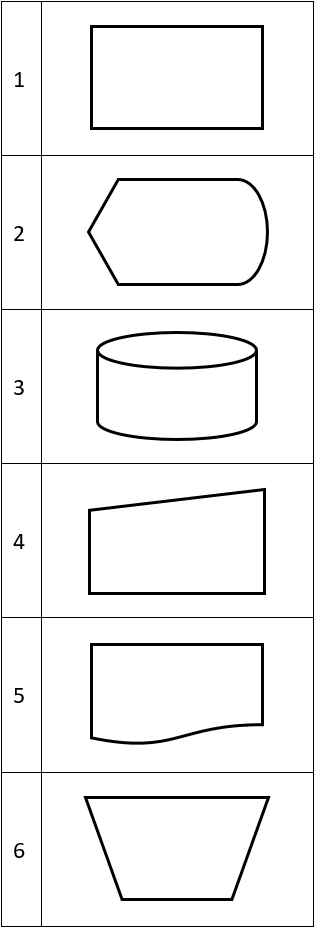
Match the system flowchart symbols displayed with their correct names.
| Process | Online Display | Direct Access Storage | Online Input | Paper Document | Manual Operation | |
|---|---|---|---|---|---|---|
| 1 | ||||||
| 2 | ||||||
| 3 | ||||||
| 4 | ||||||
| 5 | ||||||
| 6 |
Question 17 (2 marks)
Define Data Bias.
Question 18 (3 marks)
Distinguish between a Data Lake and a Data Swamp.
Question 19 (4 marks)
A pet shop stores data on pet owners and their pets. An extract of the database schema is reproduced below:
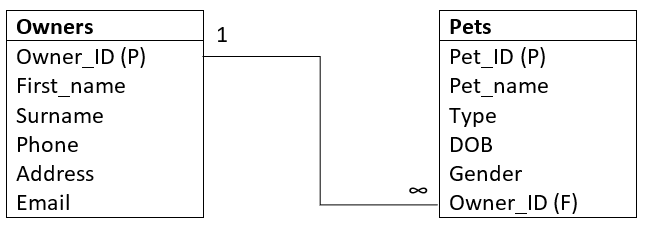
Construct an SQL query that retrieves all records where the Type of pet is a dog. Each row retrieved should include the first name, surname and email of the owner along with the pet’s name and DOB. The results are to be sorted alphabetically by the pet’s name.
Question 20 (6 marks)
Consider the following sample data for sales at a pet store:
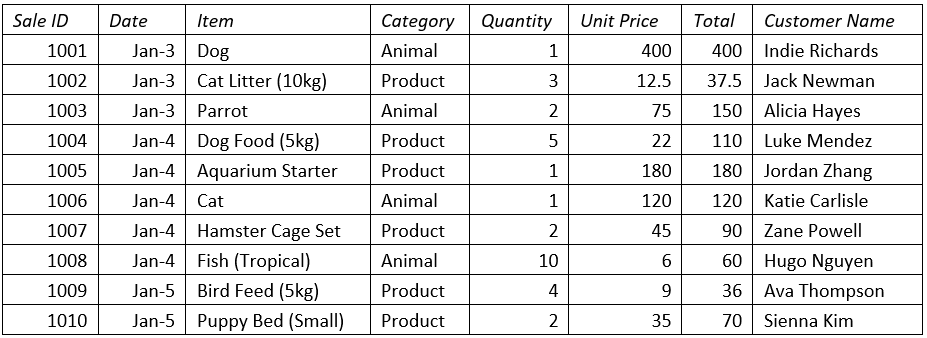
With reference to the given data, discuss how informatics can support a deeper understanding of the data.
Question 21 (2 marks)
Define data integrity and outline its importance.
Question 22 (3 marks)
Describe how data visualisations assist in understanding and communicating data. Include examples of data visualisations to illustrate your response.
Question 23 (4 marks)
The table below is a small extract of the results of a survey of over 4000 children aged 5 to 13 years of age to determine the time spent using a screen during weekdays and during weekends. The data has been anonymised to remove each child’s personal details.
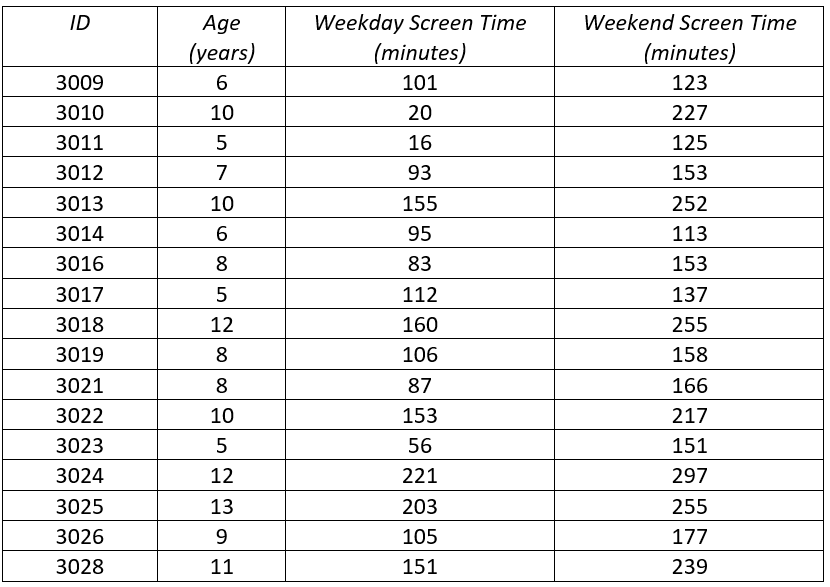
Describe a suitable data visualisation and how it could be produced from the given data. The data visualisation is to display the size and relative differences between weekday and weekend screen time for each age child.
Question 24 (6 marks)
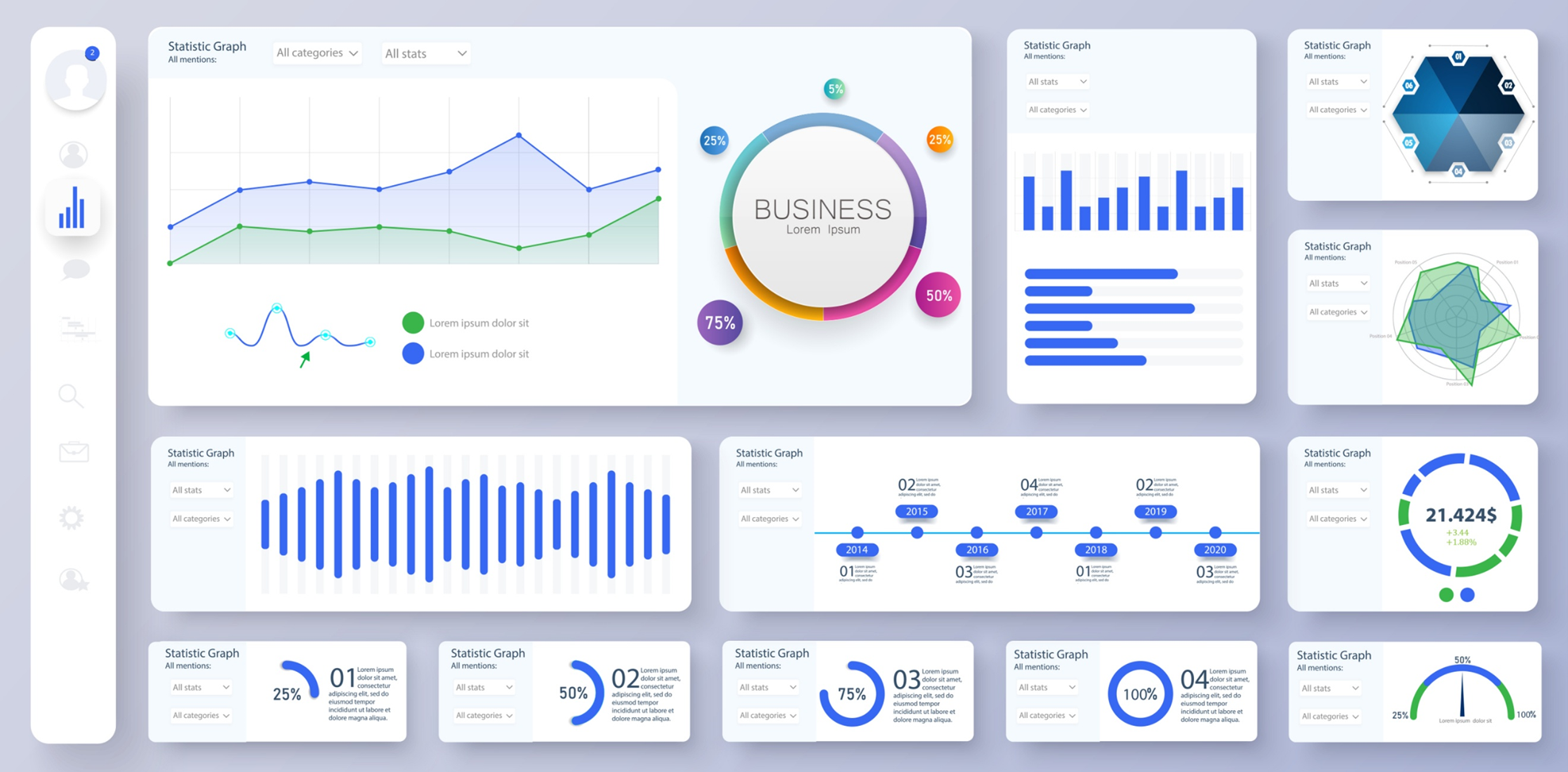
Explain how user experience (UX) design principles enhance the effectiveness of data visualisations. You may refer to the following example dashboard to assist your response.
Question 25 (2 marks)
Outline one way an intelligent system uses data to support automated decision-making in an enterprise.
Question 26 (3 marks)
Discuss ethical issues associated with the use of cameras, including facial recognition, in retail stores to identify possible security concerns.
Question 27 (4 marks)
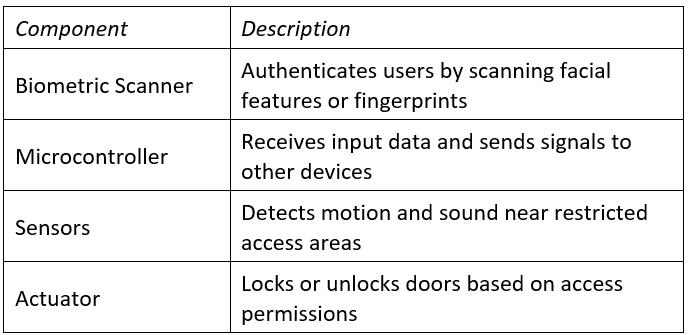
Analyse how the interaction between the given components contributes to the effectiveness of an enterprise's intelligent security system.
Question 28 (6 marks)
The following text describes how a mechanic diagnoses an engine that won’t start.
A customer brings in a car that won’t start. The mechanic first checks the battery and finds it’s fully charged, so that’s not the problem. Next, they turn the key and hear the engine crank, which means the starter motor is working. Then, they pull out a spark plug and test it—no spark. That points to an ignition problem. They inspect the ignition coil and find it has failed. After replacing the coil, the mechanic tests the engine again. This time, it starts right up. If it did not start the mechanic would continue by checking for fuel reaching the engine. If no fuel, then they would check various fuel system components. If the engine still fails to start, then they move on to other system such as the computer control system and its various sensors.
Describe the role of each significant component of an expert system that simulates a mechanic diagnosing an engine that won’t start.
Question 29 (2 marks)
Outline two tools that support the design and development of enterprise projects.
Question 30 (3 marks)
Explain how stakeholder feedback can influence the design and development of an enterprise system. In your response, refer to a specific development approach where feedback supports system development.
Question 31 (4 marks)
The decision tree below illustrates how multi-factor authentication is used to manage access to an enterprise system. A one-time password (OTP) is sent as a text message to the user’s mobile phone.
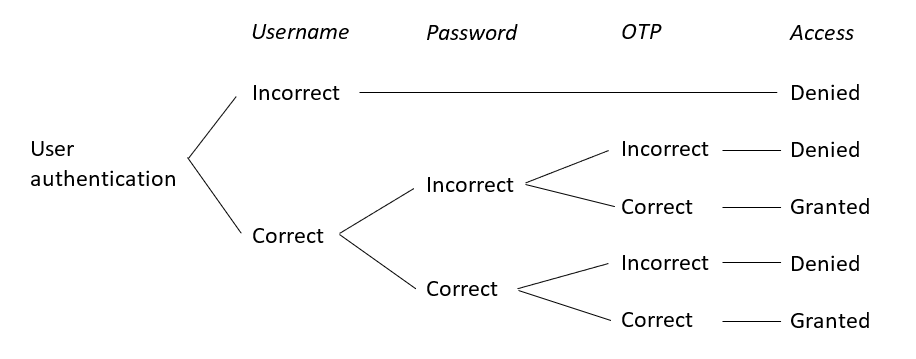
Identify different ways users can authenticate themselves when accessing this system. Justify the reasoning that may be behind the use of this specific strategy and outline any issues you perceive.
Question 32 (6 marks)
Maxwell is leading a small enterprise computing project for a new start-up developing a mobile productivity app. His team includes a freelance UX designer in Vietnam, a remote backend developer based in Perth and a local university intern.
Discuss how the following factors may affect the development of Maxwell’s project.
Offshore development
Working remotely
Freelance work
Enabling the growth of start-ups